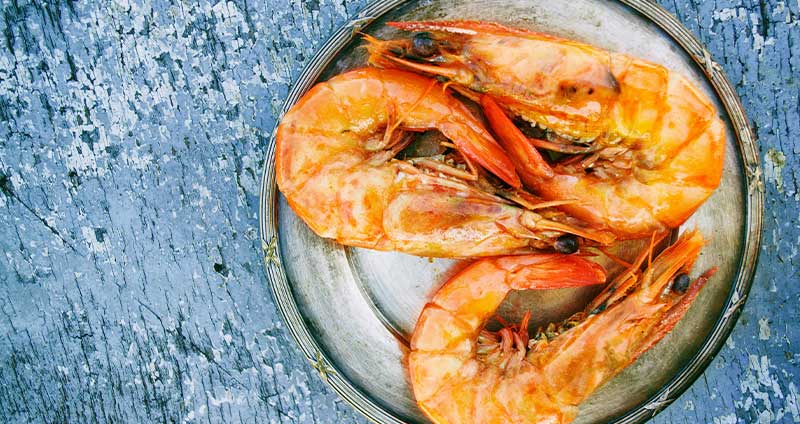
Beneath the crystal-clear waters of the Mediterranean Sea, off the coast of Dénia, where the Gulf of Valencia meets the rocky shores of the Iberian Peninsula, a special treasure lies hidden. This treasure is not gold, not pearls, but something far more refined and valuable in the world of gastronomy: the Gamba Roja de Dénia, the red prawn of Dénia, which is every gourmet’s dream and one of the noblest ingredients of Spanish Mediterranean cuisine.
A Prawn That Made History
If you walk along the quay of Dénia’s harbor on a fresh spring morning, when the fishing boats return with their night’s catch, you’ll witness a special scene. Local restaurant chefs, wholesalers, and locals themselves wait impatiently to be the first to set foot in the auction hall. No wonder: the Gamba Roja is such a rare and valuable commodity that it can fetch 100-200 euros per kilogram, especially at the peak of the season.
But what makes this prawn so special? And how did a simple sea creature become part of an entire city’s identity?
The Red Aristocrat
The Gamba Roja de Dénia (Aristeus antennatus) is no ordinary prawn. This species belongs to the family of deep-sea prawns and lives at depths of 200-1000 meters, where the water is cold and dark. Its characteristic intense red color, which doesn’t change significantly even after cooking, immediately distinguishes it from other prawns. Due to its long antennae and slender body, the Spanish often call it “carabinero” as well, which refers to a type of cavalry soldier – perhaps because of its proud, upright posture.
The Gamba Roja’s body is wrapped in a translucent red shell, through which you can almost see its interior. Its size can be impressive – the largest specimens reach 20-22 centimeters in length, although most range between 12-18 centimeters. Males are generally smaller than females, and experienced fishermen can identify them immediately.
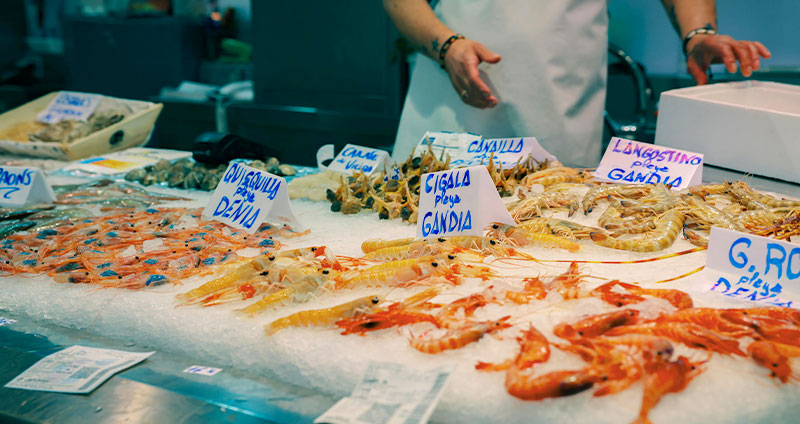
Its flavor – and here every gastronomic writer struggles to find the right words – is intense, rich, almost sweet, the essence of the sea in concentrated form. Its flesh is firm yet tender, never rubbery, and paired with a special sweetness that is characteristic only of the highest quality sea crustaceans. According to experts, this unique flavor is thanks to the prawn’s diet: the deep-sea plankton, smaller crustaceans, and organic matter it feeds on all contribute to this complex flavor profile.
Dénia: The City of the Prawn
Dénia, this charming Mediterranean port city in the Valencia region, Alicante province, has lived from the sea for centuries. The city’s name dates back to Roman times, when it was called Dianium, in honor of the goddess Diana. But modern Dénia’s identity is inseparably intertwined with the Gamba Roja.
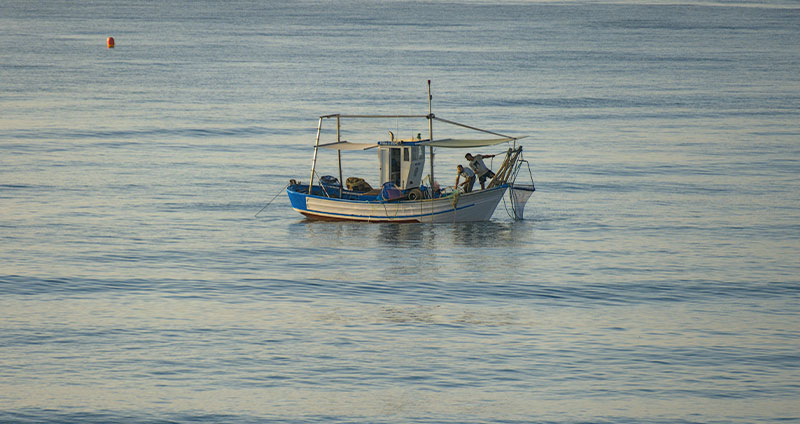
Local fishermen have known for generations those special areas on the seabed where the best quality prawns live. These fishing grounds represent secret knowledge, passed down from father to son. Experienced fishermen know exactly which parts of the seabed between Mount Montgó and the Balearic Islands offer the best hunting grounds. Deep-sea prawn fishing is not simple work – it requires special nets and techniques that don’t damage the prawns’ delicate shells.
Fishing usually takes place at night, when the prawns are more active and swim higher from the seabed. The fishing boats depart after dark and return at dawn with the fresh catch. This rhythm has defined Dénia’s life for centuries – the city’s heart beats in the harbor, where the same ritual is repeated every morning.
In the early 20th century, Dénia’s harbor was already known for its quality seafood, but the Gamba Roja truly began to gain fame in the 1960s and 70s. As Spanish gastronomy gained international recognition, this special delicacy increasingly came into the spotlight. With the development of tourism, more and more people discovered this culinary treasure, and Dénia slowly became synonymous with the prawn on Spain’s gastronomic map.
The Path to Geographic Protection
The real breakthrough came in 2012, when the Gamba Roja de Dénia received the European Union’s Protected Geographical Indication (PGI). This label is only awarded to products that show unique quality, reputation, or other characteristics that are fundamentally linked to a specific geographical area.
However, obtaining protection was not a simple process. Local fishermen, the Dénia municipality, and gastronomic experts had to work for years to prove that the Gamba Roja from Dénia’s waters is truly special. Scientific studies confirmed that the specific seabed of the Gulf of Valencia, the water temperature and salinity, as well as the special marine life all contribute to the prawn’s unique flavor and texture.
This protection was not only recognition but also practical protection for consumers. Only prawns caught from the designated marine area and meeting strict quality criteria can bear the name “Gamba Roja de Dénia.”
The Challenge of Sustainability
As the fame of the Gamba Roja grew, a serious problem emerged: the danger of overfishing. Deep-sea ecosystems are extremely vulnerable, and prawn populations regenerate slowly. However, the local fishing community recognized early that sustainability is not an option but a vital necessity.
Strict quotas were introduced, fishing seasons were regulated, and fishermen voluntarily limited the catchable quantity. Quality preceded quantity – this became the local philosophy. Every morning only a certain number of boats can go fishing, and they can only use special nets that don’t damage the seabed.
These measures paid off. Today, the Gamba Roja de Dénia is not only a gastronomic specialty but also an example of sustainable fishing. Local fishermen are proud that they have preserved this treasure for future generations as well.
Gastronomic Sanctuary
In Dénia’s restaurants, preparing the Gamba Roja is a true art. The philosophy is simple: the less intervention, the better. Most local chefs believe that simple grilling or plancha (flat-top grilling) is the best method, perhaps with a pinch of sea salt and a drop of excellent olive oil.
Quique Dacosta, the head of Dénia’s Michelin-starred restaurant, is world-famous for his creations using Gamba Roja. According to Dacosta: “The Gamba Roja doesn’t require complicated techniques. The sea has already done the work. Our task is only to show its truth.”
In traditional preparation, the prawn is cooked for barely 2-3 minutes at high heat, so the outer part caramelizes slightly while the inside remains tender and juicy. The head, which many consider the best part, is full of intensely flavored “paste” – this orange cream concentrates the prawn’s essence, and many dip bread into it.
Others use it to prepare traditional arroz a banda (prawn risotto) or fideuà (prawn pasta), where the prawn’s head and shell go into a rich stock, while the tail meat crowns the dish as decoration. These traditional Valencian dishes provide the perfect framework for the Gamba Roja’s flavor richness.
Some make the traditional fisherman’s stew called suquet, in which the prawn cooked with potatoes, tomatoes, and almonds releases its flavor. Carpaccio-style raw Gamba Roja is also increasingly popular in more modern kitchens, where the prawn’s raw sweetness is enhanced by lemon and sea salt.
The local festival, the Mostra de la Gamba Roja, held every autumn, further strengthens the prawn’s cult status. The city’s best restaurants compete with the most creative Gamba Roja-based dishes, while thousands of tourists and gastronomic pilgrims are attracted to this special event. During the festival, the city’s streets fill with the scent of the ocean, fishermen tell tales of the sea, and everyone celebrates this special gift that the Mediterranean gives them.
One Prawn, One Community
However, the story of the Gamba Roja goes beyond gastronomy. This is the story of a community that found its identity in the sea and its treasures. Dénia’s fishing families have lived from this noble profession for generations, and the Gamba Roja provides not only livelihood for them but also cultural heritage.
Talking with an old Dénia fisherman is a special experience. His eyes sparkle with the sea when he talks about the Gamba Roja – how he learned the tricks of catching from his father and grandfather, how he reads the sea, the wind, the moon cycle. “The sea gives everything if we respect it,” says one elderly fisherman, Manuel, whose family has been fishing prawns for three generations. “But you can’t force it. The Gamba Roja is a gift, not a right.”
The fishing museum in the harbor showcases traditional fishing techniques, the history of old boats, and the close connection that binds the city’s residents to the Mediterranean Sea. Children learn to respect the sea and its gifts from an early age. In schools, through special programs, they become familiar with local marine life, sustainable fishing, and of course, the Gamba Roja.
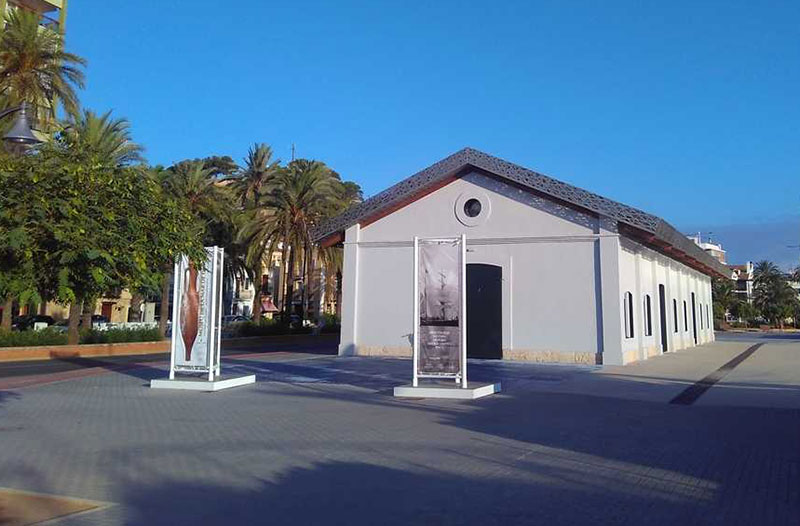
photo by: denia.net
The role of local women is also defining in this story. While the men are at sea, they hold the community together, guard the recipes, and pass down from generation to generation the knowledge of how to select, store, and prepare prawns. The women of the local markets are legendary – with one glance they can tell when a prawn was taken from the water and what quality it is.
Heritage and Future
Today, when locally-sourced, authentic, sustainably produced foods are receiving increasing emphasis worldwide, the Gamba Roja de Dénia is a perfect example of how a traditional product can become a symbol of modern, conscious consumption.
The prawn’s story teaches us about patience – that quality requires time and care. It teaches us about sustainability – that we can only take if we also give back. And it teaches us about community – that a city’s, a culture’s identity can be connected to a tiny sea creature that lives in the depths.
When next a plate of Gamba Roja de Dénia is placed before us, perhaps we won’t just enjoy its flavor. Perhaps we’ll remember the fishermen’s dawn departure, the protected seabed, the knowledge spanning generations, and a community’s determination to preserve what is truly valuable. Because the Gamba Roja de Dénia is more than a prawn – it’s the red gold of the Mediterranean, telling stories of the past and giving hope for the future.
__________________________________________________
For more Costa Blanca tips, follow us on Pinterest! 🧡