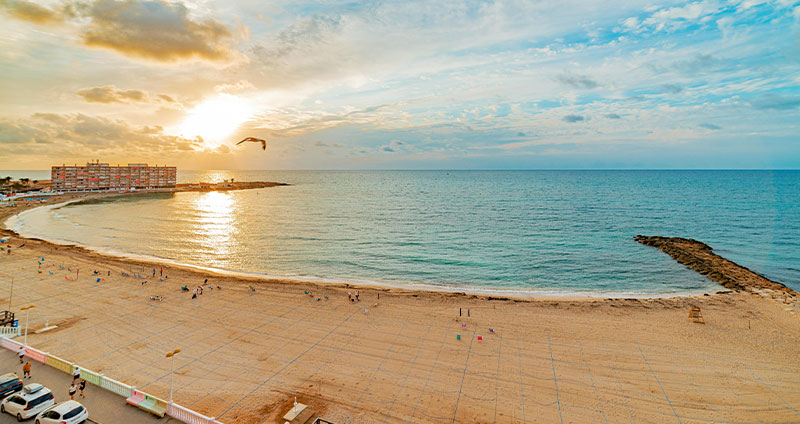
When most tourists have long since traveled home and the Costa Blanca beaches have emptied out, Torrevieja’s true face unfolds. After the summer months’ congestion, the autumn, winter, and spring period fills this Mediterranean city with a special magic. I’ve been living here for years now, and I honestly say: off-season Torrevieja is the real experience.
Torrevieja – the history of a salt city
Before we dive into the activities, it’s worth getting to know this fascinating city a bit. Torrevieja got its name from an ancient watchtower – “Torre Vieja” means “old tower.” This tower was once part of the coastal defense system that protected the region against pirates.
The city’s real rise, however, began with salt extraction. In the 19th century, Torrevieja became Spain’s most important salt extraction center, and this tradition remains defining to this day. The famous pink and green lagoons – Laguna Rosa and Laguna de la Mata – formed around still-operating salt mines and represent extraordinary value not only economically but also from a tourism perspective.
Until the mid-20th century, Torrevieja was a quiet fishing village whose life was determined by salt and the sea. The real change began in the 1960s when Spanish and later European tourists discovered the region. The city developed dramatically but fortunately retained its Mediterranean charm and authentic Spanish character.
Today, Torrevieja is home to a diverse, international community where locals and foreigners live together harmoniously. And although the summer peak season is busy, the rest of the year offers the perfect opportunity to truly get to know this special place.
Why is Torrevieja better off-season?
Before we move on to the five wonderful activities, let me share why I love the off-season period. First of all, the weather. Yes, you heard right – even off-season! In Torrevieja, the average temperature even in winter hovers around 16-18 degrees Celsius, and the number of sunny days exceeds 320 per year. From October to May, the weather is perfect for walks, excursions, and cycling.
Secondly, the prices. Accommodations, restaurants, and services are significantly cheaper when it’s not the tourist peak season. And thirdly – and this is perhaps the most important – you can get to know the real, authentic Torrevieja when the locals reclaim the city and everything becomes slower, calmer, more human.
1. Habaneras Festival – end of august, last celebration of summer
Although technically this still falls at the end of summer, the Habaneras Festival is already a kind of transition between summer madness and autumn calm. It’s usually held in the last week of August, and this event is one of the most beautiful manifestations of Torrevieja’s cultural heritage.
Habanera is a special musical style that arrived from Cuba in the 19th century when Spanish sailors and merchants returned home from the colonies. In Torrevieja, this genre took particularly deep root, as the city has always had a lively connection with overseas territories.
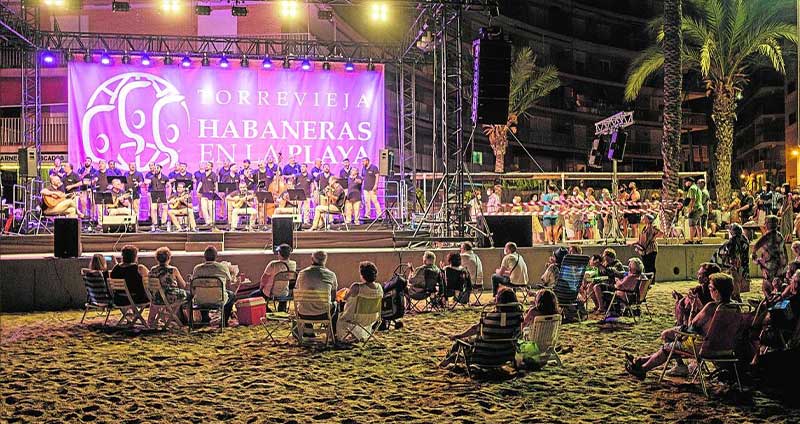
The picture was taken by: laverdad.es
During the festival, international choirs compete with each other in the city’s main square, on the seaside promenade, and at various venues. The melodies are melancholic and passionate, perfectly reflecting the longing for the sea and nostalgia for distant lands. The concerts are usually free, and the atmosphere is magical – listening to these songs in the twilight light, surrounded by the scent of the Mediterranean Sea, is a true spiritual experience.
According to tradition, habanera should be listened to accompanied by “café caleta” – this is a special coffee drink made with rum, sugar, and coffee beans, then set on fire. The bluish light of the flame and the aroma of rum are part of the habanera experience.
2. Christmas market and advent preparations – december
If you think a Mediterranean Christmas can’t be as magical as the northern, snowy version, then you haven’t been to Torrevieja in December. The city uniquely blends Spanish traditions with international influences, resulting in a unique Christmas atmosphere.
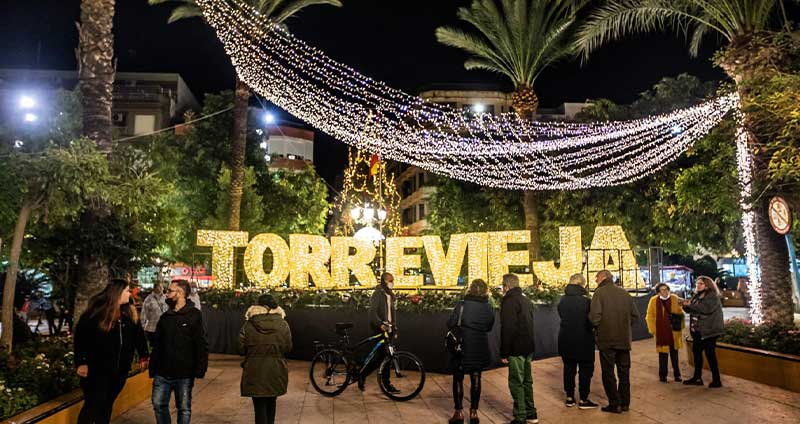
From the end of November, the city center transforms into a fairy-tale world. The Plaza de la Constitución is decorated with a giant Christmas tree, string lights, and installations. The Christmas market opens on weekends, where local craftsmen sell their wares – ceramics, wooden decorative items, jewelry, homemade delicacies.
But the biggest experience is getting to know local Christmas customs. On December 22nd is the famous Spanish Christmas lottery draw, “El Gordo” – the whole country awaits this, and everyone in Torrevieja is excited together. On December 24th, at midnight, the “Misa del Gallo” (Rooster Mass) begins in the churches, where the whole family goes together.
On December 28th is “Inocentes Day” – a kind of Spanish April Fools’ Day when everyone plays tricks on each other. And let’s not forget Epiphany, January 6th, when the Three Kings arrive – there’s a huge parade in the city where the kings throw sweets to the children.
The Christmas period’s gastronomy is also special: turrón (almond nougat), polvorones (crumbly cookies), and the Christmas lunch highlight, seafood – prawns, lobster, oysters. In December, the weather is also pleasant, with temperatures around 15-18 degrees and brilliant sunshine, so you can even walk on the beach while most of Europe is already snowing.
3. New Year’s fountain grape eating and fireworks – december 31st
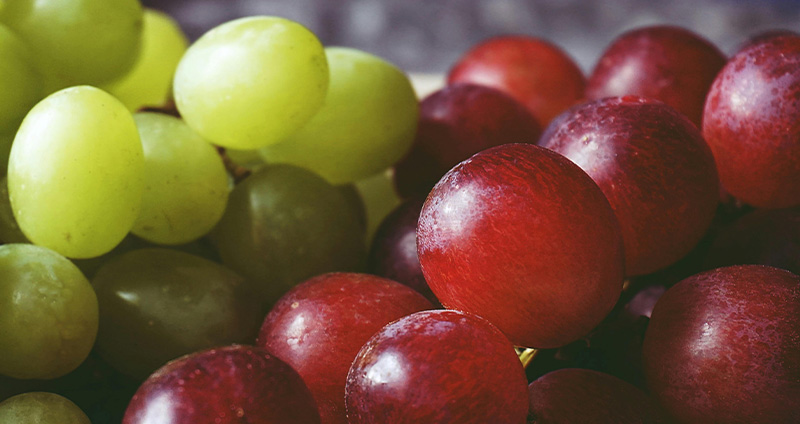
New Year’s in Torrevieja is a completely different experience than anywhere else in Europe. According to Spanish tradition, at the stroke of the new year, you must eat 12 grapes – one for each bell chime. Each grape supposedly symbolizes a month, and if you manage to eat all 12 in rhythm with the bell chimes, your whole year will be lucky.
In the city center, at the Plaza de la Constitución fountain, a huge crowd gathers on December 31st evening. The atmosphere is fantastic – families, friends, couples all waiting for midnight together. People prepare with champagne, grapes, and good spirits. At exactly midnight, the bells ring, and the legendary grape eating begins. Believe me, it’s not so easy to eat 12 grapes in 12 seconds!
After midnight, a stunning fireworks display lights up the sky and the sea. It’s beautifully visible from the port, the beach, and the city center. People hug, kiss, toast, and the “¡Feliz Año Nuevo!” (Happy New Year!) greeting is heard everywhere.
But the evening doesn’t end here. Spaniards like to extend the celebration – restaurants and bars stay open until dawn, and many only go home in the morning. The New Year’s lunch or rather brunch on January 1st is another highlight – families eat traditional foods and spend most of the day together.
4. Winter hiking in natural parks – january-march
When most of Europe is freezing in the cold, the Torrevieja area becomes a true paradise for nature lovers. During the winter months – between January and March – the weather is perfect for hiking: not too hot, but pleasant 15-20 degree daytime temperatures, clear skies, and stunning nature.
The Laguna Rosa and Laguna de la Mata nature reserve is most beautiful during this period. The two lagoons – one pink, the other green – offer a special sight. The pink color is due to a microorganism, the Dunaliella salina algae, which can survive in high salt concentrations. In winter, the colors are even more intense, and the birdlife is richer – many waterbirds choose this area as their winter resting place.
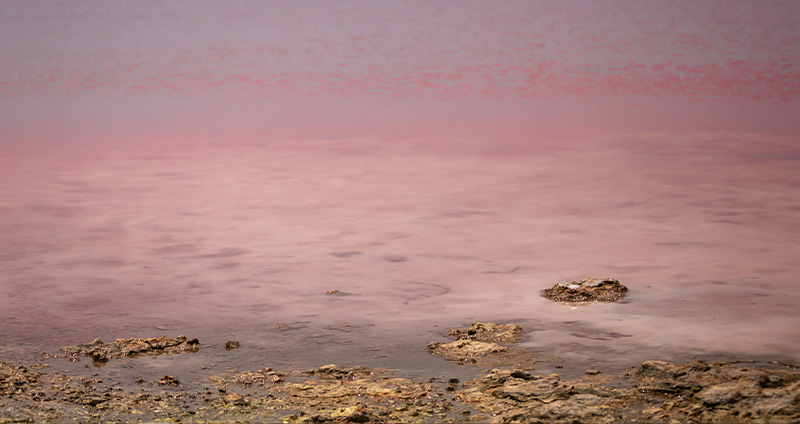
There are several hiking trails around the lagoons – the shortest is about 3 kilometers, the longest an 11-kilometer loop. Along the way, information boards tell about the area’s flora, fauna, and geology. The view is breathtaking: the contrast of pink water, white salt crystals, green vegetation, and blue sky is simply magical.
The Sierra de Orihuela is also a wonderful winter hiking destination. This is a smaller mountain range not far from Torrevieja, offering stunning views of the sea and surrounding towns. There are trails of various difficulty levels – everyone from beginners to advanced hikers can find something suitable.
In winter, it’s not uncommon to see flamingos at the lagoons – these beautiful birds seek the warmer Mediterranean climate in winter. Sunrise and sunset are particularly stunning times – the play of light on the waters and salt crystals creates a magical atmosphere.
5. Saint Joseph’s day and las fallas preview – march
In mid-March, on the 19th, Spain celebrates Saint Joseph’s Day, which is also “Día del Padre” – Father’s Day. But in Valencia and surrounding settlements, including Torrevieja, this is the time of the LAS FALLAS festival.
Although the biggest celebration is in Valencia, you can feel the festival atmosphere in Torrevieja too. Las Fallas is an ancient Valencian tradition that bids farewell to winter and welcomes spring. The central element of the festival is the “falla” – a huge, artistically valuable figure or composition made of papier-mâché, wood, and other materials, which we can admire for days, then on the last night is ritually burned.

The picture was taken by: Alicante Al Día
In Torrevieja, smaller fallas are created, but the atmosphere is the same: music plays in the streets, people wear traditional Valencian clothes, and firecrackers pop everywhere – this is the “mascletà,” a special Valencian pyrotechnic show that takes place during the day and is more about sound effects than spectacle.
In the evening there’s “verbena” – street parties with live music, where locals dance sevillanas and other Spanish dances. The foods are also special: “buñuelos” (donut-like pastry), “churros con chocolate,” and paella, the crown jewel of Valencian cuisine.
On the night of March 19th, at midnight, the burning of the fallas offers a stunning spectacle – the fire, smoke, and crowd’s shouts are a true catharsis. Afterward, people party in the streets until dawn. This festival is the perfect opportunity to get to know Valencian culture, traditions, and community spirit.
Conclusion – Discover the real Torrevieja
Torrevieja off-season is like a precious secret that only locals and insiders know. When the crowds leave, the city returns to its true self – café terraces fill with locals with whom you can talk for hours, restaurants serve authentic Spanish dishes, and seaside walks take place in silence and tranquility.
The five activities I’ve presented are just a fraction of what Torrevieja offers off-season. There’s also Easter Week with its processions, the spring flower festival, autumn gastronomic days, and countless other local celebrations and events.
If you want to get to know Spain’s real face, if you crave authentic experiences instead of mass tourism, if you want to explore a wonderful Mediterranean city in pleasant weather at friendly prices – come to Torrevieja off-season. I guarantee you’ll fall in love and want to come back again.
¡Bienvenidos a Torrevieja! – Welcome to Torrevieja!
__________________________________________________
For more Costa Blanca tips, follow us on Pinterest! 🧡